
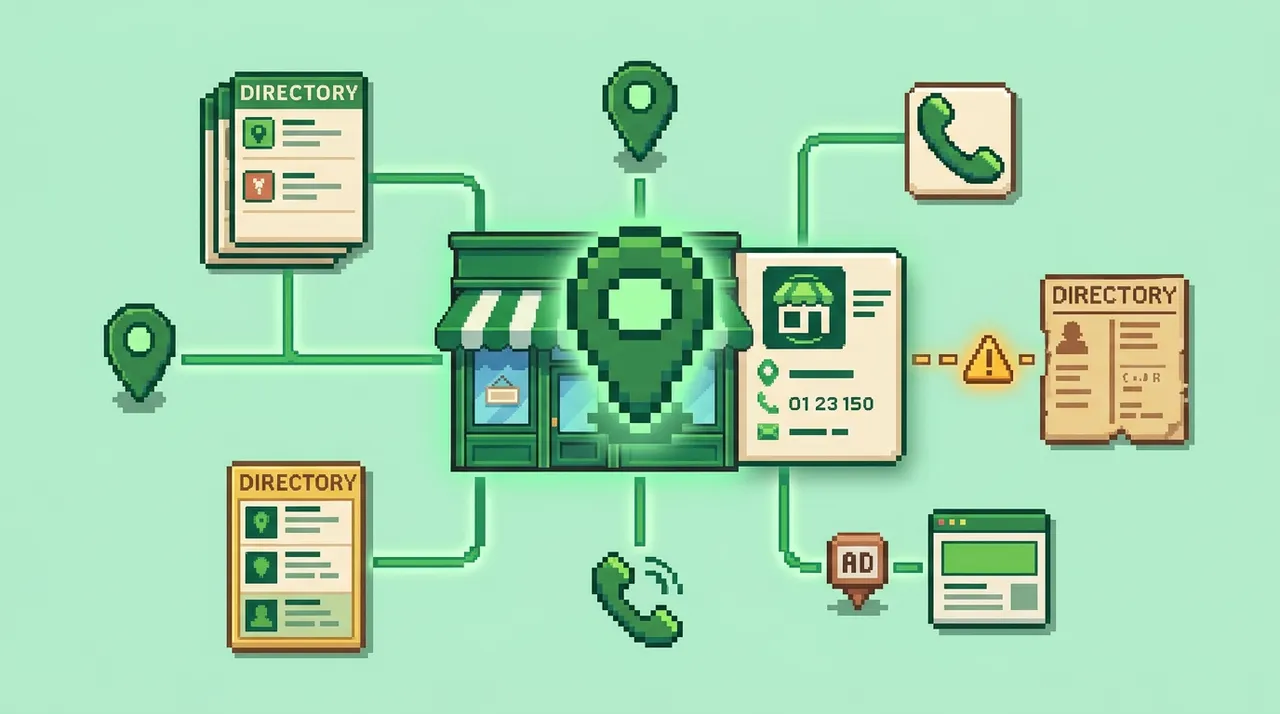
If your local rankings dropped, do not buy a citation package before you audit the citations you already have.
Citations matter most when major listings create confusion: wrong phone number, old address, inconsistent business name, duplicate profiles, or mismatched website links. The first job is not “more listings.” The first job is to find the listings that can actually mislead customers or weaken trust.
Start here: check your name, address, phone, website, and duplicate listings across the places customers and systems actually use. If you want SEOG to do the first pass, run a free local visibility analysis →.
In this guide
Short answer: what to check first
| Priority | Check | Why it matters |
|---|---|---|
| 1 | Google Business Profile NAP | This is the primary local visibility profile. |
| 2 | Website contact/location page | Your own site should match the profile. |
| 3 | Major maps/directories | Wrong customer-facing listings cause confusion. |
| 4 | Duplicate listings | Duplicates split trust and create conflicting signals. |
| 5 | Old addresses/phones | Legacy data can keep resurfacing. |
| 6 | Industry directories | Important when customers actually use them. |
| 7 | Low-value bulk directories | Usually not the first fix. |
The buyer moment: “Do citations still matter?”
Citations are not magic. They are trust infrastructure.
A business owner or agency usually asks about citations when:
- the business moved;
- the phone number changed;
- Google Maps calls dropped;
- a competitor outranks them;
- a listing shows an old address;
- customers call the wrong number;
- multiple profiles exist;
- an agency recommends a citation package.
The better question is: “Which inconsistencies are important enough to fix first?”
What not to fix first
| Do not start with | Why to be careful |
|---|---|
| Buying hundreds of new citations | More weak listings will not fix major conflicts. |
| Changing every minor directory manually | Time sink if major profiles are still wrong. |
| Using keyword-stuffed business names | Can create Google Business Profile risk. |
| Ignoring the website | Your own site should be the clearest identity source. |
| Treating every mismatch equally | Some inconsistencies matter far more than others. |
NAP consistency checklist
| Field | What to confirm |
|---|---|
| Name | Real-world business name, not keyword-stuffed variants. |
| Address | Correct public address or service-area setup. |
| Phone | Main customer phone, consistent where possible. |
| Website | Correct canonical website URL. |
| Categories | Similar business type across major platforms. |
| Hours | Accurate where customers make decisions. |
| Duplicates | Old or alternate profiles identified. |
Which listings matter most?
| Listing type | Priority |
|---|---|
| Google Business Profile | Highest. Customers and Maps visibility depend on it. |
| Website | Highest. It should support entity/location clarity. |
| Apple Maps/Bing/Yelp/Facebook | High when customers see or use them. |
| Industry-specific directories | High if the vertical depends on them. |
| Data aggregators | Medium; useful for cleanup but not a magic fix. |
| Random directories | Low unless they rank or send customers. |
Fast path: if calls dropped, audit citations as part of the full local visibility picture. A wrong phone number is urgent. A weak directory listing with no traffic is not.
When citation cleanup is the right first fix
Citation cleanup becomes high priority when:
- customers are finding the wrong phone/address;
- Google profile data conflicts with the website;
- the business moved recently;
- duplicate listings are visible;
- reviews are split across profiles;
- major platforms show different names;
- the business has changed ownership or branding.
If none of those are true, citations may not be the first lever. Reviews, category fit, website support, or competitors may matter more.
How SEOG helps
SEOG helps separate urgent NAP issues from low-value directory busywork.
| SEOG output | What it helps decide |
|---|---|
| GBP + website identity check | Is the core entity consistent? |
| Major listing review | Are customers seeing wrong info? |
| Duplicate profile scan | Are listings splitting trust? |
| Competitor comparison | Are citations likely the actual gap? |
| Risk-ranked action list | Which listing issues should be fixed first? |
| PDF-ready report | What should owner/agency approve before edits? |
FAQ
Do citations still help local SEO?
They can, especially when current data is inconsistent. But citations are usually one part of a broader local visibility system.
Should I buy a citation package?
Only after you know what problem you are solving. If major NAP conflicts exist, cleanup matters more than volume.
Should my business name include keywords in citations?
Use the real business name. Keyword stuffing can create trust and policy risk, especially around Google Business Profile.
Can SEOG fix citations automatically?
SEOG should guide diagnosis and prioritization. Actual edits should be reviewed, especially for sensitive identity/location fields.
Fix the identity layer first
Before buying more listings, make sure the business identity is clear where it matters most: Google, your website, major maps, and visible customer-facing platforms.
Start free business analysis →
Related SEOG guides
- AI Search Visibility Checklist for Local Businesses: What to Fix Before Buying More Content
- Dentist Local SEO Checklist: What to Fix Before You Buy More Ads
- Reviews Not Showing on Google? What Local Businesses Should Check First
- Changing Your Google Business Profile Category? A Risk Checklist Before You Edit